
Pope Leo XIV has presented his first encyclical to the Church, signed on May 15 and delivered on May 25. It is an extraordinary encyclical, entitled Magnifica Humanitas, emphasizing the grandeur of the human nature which God has given to us, and reflecting upon many contemporary matters which can detract from that nature, most especially that of artificial intelligence. The encyclical is extremely well crafted, and each page contains a depth of wisdom, insight and spiritual counsel so necessary in our present times. It would be impossible to give an overview of Magnifica Humanitas in a brief summary. It requires careful reading and reflection with much prayerful attention.
The fundamental teaching of Magnifica Humanitas regards the unique and privileged state of our humanity. This understanding is so critical today when it is believed that a machine can act as a human person in simulating thought, and even emotion, in a spontaneous manner, without the capacity for ethical determination through artificial intelligence. Indeed, there are those who believe that the machine can actually substitute for God in making determination and giving decisions that affect human life and interaction. We live in a world where Wall Street and the stock market are the arbiters to which we look in the face of critical times and decisions. Artificial intelligence can be controlled by businesses that are interested in accumulating profit in the quickest manner and eliminating natural insight and labor that would usually be part of human affairs. Profit can easily become the ultimate goal for artificial intelligence.
Pope Leo makes clear that the human person is made by God in His image and likeness. It is this which gives human nature its splendor and which bestows on every person an inherent dignity. The freedom that each person has to be the unique person as God made him or her to be is fundamental to each of us and to our individual rights. It is in the fulfillment of being this person that we find our true meaning and joy. Ultimately, we are led into the fullness of life in communion with God and others when we are with Him in eternity. The pope emphasizes that human flourishing cannot be reduced to technological fulfillment as the human heart is ordered toward God. He refers to the famous words from St. Augustine’s Confessions, “You have made us for yourself, O Lord, and our hearts are restless until they rest in you.”
The encyclical teaches, “At the heart of the Christian understanding of the human person lies the great biblical affirmation that men and women are created in the image and likeness of the Triune God (cf. Gen 1:26-27). Created for relationship, every human person is planned and willed by God to enter into communion with Him, with others and with creation. Human dignity does not depend on a person’s abilities, wealth or position in life, nor on the right or wrong choices made; instead, it is a gift that proceeds and transcends each person, endowed by God as an expression of His unfailing love. For this reason, the human person always remains the ‘way for the Church,’ and the heart of every authentic path of integral human development.”
Pope Leo so powerfully emphasizes that the human person is imperfect, and that human nature is as well. Therefore, humanity should not be considered to be surpassed, replaced or merged with machines or other substitutes for life. If the human being is treated as something to be perfected or surpassed, it becomes easier to accept that some lives are less useful and less worthy. Pope Leo insightfully states that: “Our relationship with life seems to be in crisis today. Everything that appears as ‘a limit’ — incapacity, illness, old age, suffering, vulnerability — tends to be seen primarily as a defect to be corrected, rather than a reality through which our humanity matures and opens itself to relationship. And yet we must remember that humanity flourishes not despite limitations, but often through them.” How much our society needs to appreciate this today.
The splendor of humanity is an accepting of ourselves as we are before a God who created us as limited, and who entered into our limitation through the Person of Jesus Christ. It is His love, understanding, compassion and forgiveness that raise us to the true grandeur of being human in union with Him and each other. Artificial intelligence cannot surpass or understand the limitations of humanity, especially in its regard to substitute a transient material joy for true achievement. Artificial intelligence simply cannot comprehend the Incarnation or the cross of Christ. While artificial intelligence can be used for much good, it also can be used for much destruction, especially as it tends to shadow the meaning of true humanity and move so quickly to overcome limitations.
Pope Leo speaks of the good that nuclear energy can accomplish, but also the utter destruction it can bring about. That is why we are committed to the disarming of nuclear power. He urges that the same disarming must happen in regard to artificial intelligence, if it is truly to assist in regard to improving the human condition. As the pope says, “I would like to employ the expression ‘to disarm,’ which is close to my heart. Disarming AI means freeing it from the mentality of ‘armed’ competition, which today is not limited simply to the military context, but also to an economic and cognitive phenomenon. ... To disarm does not mean rejecting technology, but preventing it from dominating humanity.”
The encyclical uses the analogy of the biblical account in the Book of Genesis of the Tower of Babel, where humanity decides to build a tower to climb in order to take the place of God. Because of this arrogance, God confuses the language of all men and women so that they cannot understand each other and are scattered throughout the world. St. Augustine, the mentor of Pope Leo XIV, wrote that the correction of the confusion caused at the Tower of Babel was healed by the unity that came about, especially to the understanding of languages, at Pentecost, which we just celebrated. It is interesting that the pope refers to the Tower of Babel, but uses the biblical narrative of Nehemiah building a new city of Jerusalem as the antidote to Babel. In the use of this narrative, it seems that Pope Leo is stressing that humanity, quite limited, can itself take the necessary steps to unify itself and correct the confusion which pride can cause. While we must rely on the help of God to do this, God has given humanity the ability to understand for itself what must be done. We truly are at this point as artificial intelligence increases and threatens the very splendor of human nature.
We are very grateful to our Holy Father, Pope Leo XIV, for this magnificent encyclical. He reminds us that it is only human insight, relationship with God and human compassion that lead us to the meaning of life, and not that which comes from the machinery of artificial intelligence, which is making such a frightening advance today and open to much harm to our magnificent humanity. There is an urgency in addressing the use of artificial intelligence so that it can be used properly and not in a destructive manner.
Pope Leo XIV concludes his magnificent encyclical by referring to the role of Mary within salvation and within our lives. He refers to her prayer of the Magnificat and reflects, “I entrust our desire to the Mother of Christ, to the Woman of the Magnificat, that she may guide our steps through this time of change and preserve in each of us true faith in the Gospel, so that we may bear witness to the grandeur of humanity, in which God has made His dwelling.”
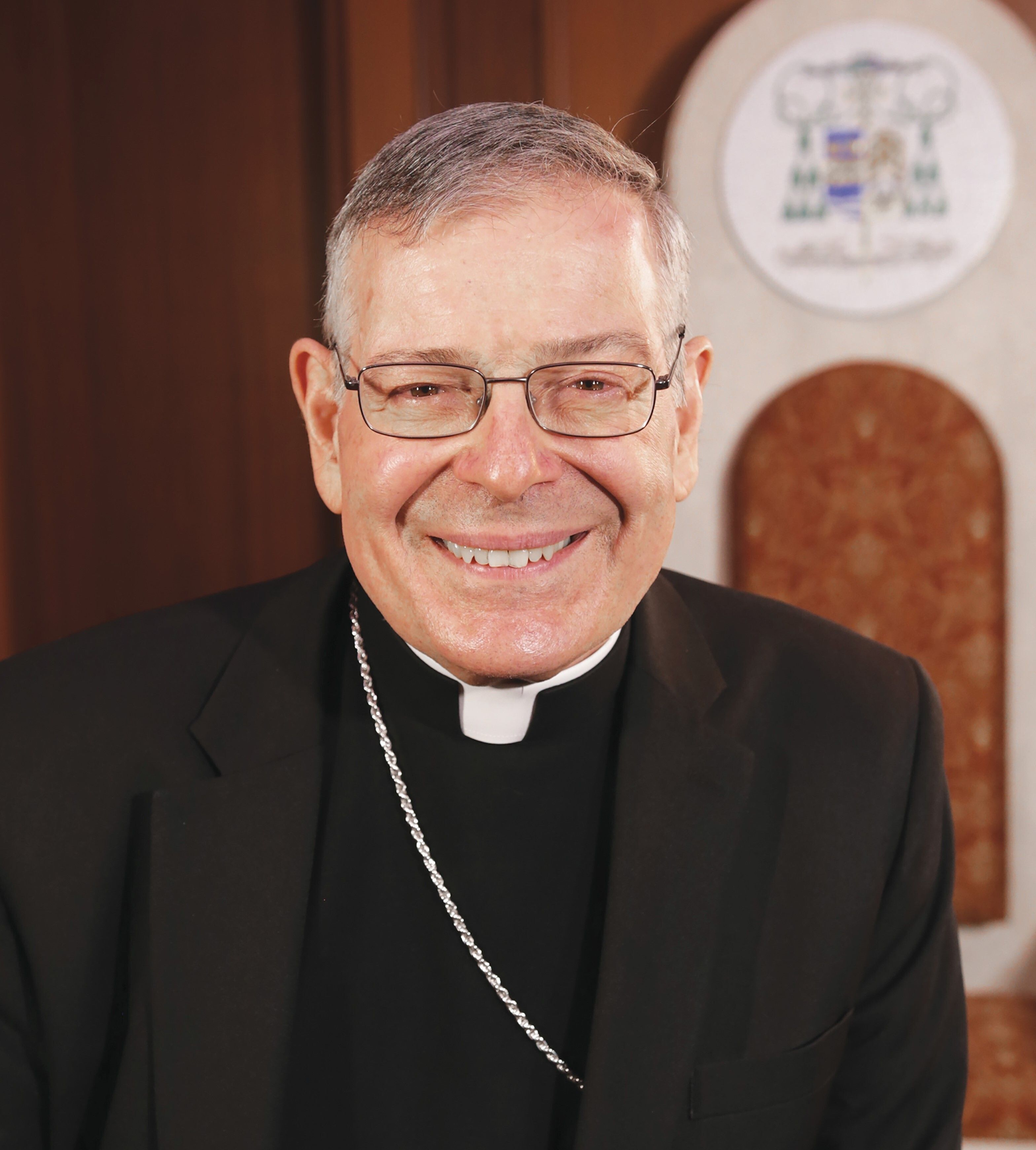
Most Reverend Gerald M. Barbarito
