

Each year during Lent, Christians throughout the world hear a familiar invitation: fast, give alms and pray. Fasting disciplines the body. Almsgiving opens the heart to those in need. But prayer — often the most neglected of the three — remains the soul of the entire spiritual life. Without prayer, Christianity risks becoming little more than moral effort or religious routine. With prayer, it becomes what it was always meant to be: a living relationship with God. For many people today, however, prayer can feel mysterious or intimidating. They wonder whether they are doing it “correctly,” or whether they are capable of prayer at all. Here, the wisdom of St. Teresa of Ávila (1515-82) offers remarkable clarity. The Spanish Carmelite reformer and Doctor of the Church remains one of the most insightful guides to the interior life in the history of Christianity. Her writings — especially The Book of Her Life and The Interior Castle — continue to illuminate the path of prayer for believers across centuries. Teresa’s understanding of prayer is both profound and disarmingly simple. She famously wrote: “Prayer is nothing else than an intimate sharing between friends; it means taking time frequently to be alone with Him who we know loves us.” In an age often marked by distraction and restlessness, Teresa’s insight is more relevant than ever. Prayer is not first about complex ideas or elaborate formulas. It begins with friendship.
From her teachings we can draw seven practical steps that help open the door to this friendship with God. I will be following here some highly interesting remarks in this matter advanced by the Spanish theologian Matilde Latorre (from the prestigious magazine Aleteia).
1. Understanding What Prayer Really Is
Many people imagine prayer as a complicated spiritual exercise. Teresa disagrees. She writes:
“I do not ask you now to think about Him or to form many concepts. I ask you only to look at Him.” Prayer begins simply by turning our attention toward Christ. Like any friendship, it grows through time, presence and sincerity. Yet, Teresa also knew that such friendship requires perseverance. She famously called it “a great and very determined determination” — the decision to continue praying even when it feels difficult.
2. Preparing the Heart
Prayer rarely flourishes in an atmosphere of constant noise and distraction. Teresa recommends creating a space of recollection: a quiet place, a passage from the Gospel, perhaps an image of Christ that helps focus attention. Even the body plays a role. A calm posture helps recollect the mind and the heart. These simple preparations allow us to become aware of God’s loving presence.
3. Entering into Prayer
Each person must discover the form of prayer that fits his or her temperament. Teresa suggests several simple approaches: imagine Christ present within you; place yourself within a Gospel scene; gaze upon a sacred image; or slowly pray the Our Father, savoring the words that Jesus Himself taught. Reflection may help, but it should not dominate the encounter. Prayer is not primarily an intellectual exercise. It is a conversation of the heart.
4. Remaining in Christ’s Presence
At the center of prayer is the person of Jesus. Teresa advises something beautifully simple: “Look that He looks at you.” To pray is to remain quietly in Christ’s presence, allowing Him to see us as we are and to speak to our hearts. In that silence, God begins His work within us.
5. Recognizing Prayer as a Journey
Prayer is not a single moment but a lifelong path. Gradually it reveals who Jesus truly is — and who we ourselves are in the light of God. Through prayer, we begin to see ourselves as God sees us: loved, called and invited into deeper communion. As Teresa wrote: “God does not force our will. He takes what we give Him. But He does not give Himself entirely until we give ourselves entirely.”
6. Allowing Prayer to Transform Us
Prayer will sometimes bring peace and consolation. At other times, it may feel dry or difficult. Teresa insists that feelings are not the measure of prayer. What matters is fidelity. Over time, prayer quietly transforms the way we see the world. Other people, daily struggles and even suffering itself begin to take on new meaning. We start to see life through the lens of hope.
7. The True Test of Prayer
Authentic prayer always leaves a mark. It changes the way we live and the way we treat others. Teresa was unmistakably clear: “The love of God must not be fabricated in our imagination but tested by works.” The most reliable sign that prayer is genuine is simple: love of neighbor. Indeed, Teresa summarized the entire spiritual life in a single observation: “The best way to discover whether we love God is to see whether we love our neighbor.” Prayer also deepens our capacity for discernment — the ability to recognize God’s call in our lives. Through prayer, we grow in truth, discover our vocation and gradually undergo the conversion of heart that shapes the Christian life. In a world filled with noise, anxiety and relentless activity, the wisdom of St. Teresa offers a quiet but powerful reminder. Prayer is not reserved for mystics or specialists in spirituality. It is the birthright of every believer. It begins with a simple decision: to spend time with the One who loves us. And once that friendship takes root, it gradually transforms everything.
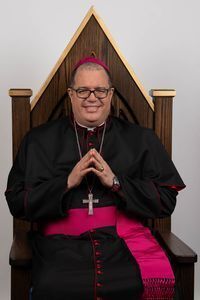
Bishop Manuel welcomes comments and reflections from readers: bishopofpalmbeach@diocesepb.org.
Aprender a Orar: Siete Lecciones de Santa Teresa de Ávila
Cada año durante la Cuaresma, los cristianos de todo el mundo escuchan una invitación familiar: ayunar, dar limosna y orar. El ayuno disciplina el cuerpo. La limosna abre el corazón a quienes están en necesidad. Pero la oración —a menudo la más descuidada de las tres— sigue siendo el alma de toda la vida espiritual. Sin oración, el cristianismo corre el riesgo de convertirse en poco más que un esfuerzo moral o una rutina religiosa. Con la oración, se convierte en lo que siempre estuvo destinado a ser: una relación viva con Dios. Para muchas personas hoy en día, sin embargo, la oración puede parecer misteriosa o incluso intimidante. Se preguntan si están orando “correctamente” o si realmente son capaces de orar. Aquí es donde la sabiduría de Santa Teresa de Ávila (1515–1582) ofrece una claridad extraordinaria. La reformadora carmelita española y Doctora de la Iglesia sigue siendo una de las guías más profundas sobre la vida interior en la historia del cristianismo. Sus escritos —especialmente El libro de la vida y El castillo interior— continúan iluminando el camino de la oración para los creyentes a lo largo de los siglos. La comprensión de Teresa sobre la oración es a la vez profunda y sorprendentemente sencilla. Ella escribió célebremente: “La oración no es otra cosa que tratar la amistad, estando muchas veces tratando a solas con quien sabemos que nos ama.” En una época a menudo marcada por la distracción y la inquietud, la intuición de Teresa es más relevante que nunca. La oración no comienza con ideas complejas ni con fórmulas elaboradas. Comienza con la amistad.
De sus enseñanzas podemos extraer siete pasos prácticos que ayudan a abrir la puerta a esta amistad con Dios. Aquí seguiré algunas observaciones muy interesantes sobre este tema presentadas por la teóloga española Matilde Latorre (de la prestigiosa revista Aleteia).
1. Comprender lo que realmente es la oración
Muchas personas imaginan la oración como un ejercicio espiritual complicado. Teresa no está de acuerdo. Ella escribe: “Ahora no les pido que piensen mucho en Él ni que saquen muchos conceptos. Les pido solamente que lo miren”. La oración comienza simplemente dirigiendo nuestra atención hacia Cristo. Como cualquier amistad, crece con el tiempo, la presencia y la sinceridad. Sin embargo, Teresa también sabía que esa amistad requiere perseverancia. Famosamente la llamó “una grande y muy determinada determinación”: la decisión de continuar orando incluso cuando se vuelve difícil.
2. Preparar el corazón
La oración rara vez florece en un ambiente de ruido constante y distracción. Teresa recomienda crear un espacio de recogimiento: un lugar tranquilo, un pasaje del Evangelio, quizá una imagen de Cristo que ayude a enfocar la atención. Incluso el cuerpo desempeña un papel. Una postura serena ayuda a recoger la mente y el corazón. Estas sencillas preparaciones nos permiten tomar conciencia de la presencia amorosa de Dios.
3. Entrar en la oración
Cada persona debe descubrir la forma de oración que mejor se adapte a su propio temperamento. Teresa sugiere varios caminos sencillos: imaginar a Cristo presente dentro de uno mismo; situarse dentro de una escena del Evangelio; contemplar una imagen sagrada; o rezar lentamente el Padre Nuestro, saboreando las palabras que el mismo Jesús nos enseñó. La reflexión puede ayudar, pero no debe dominar el encuentro. La oración no es principalmente un ejercicio intelectual. Es una conversación del corazón.
4. Permanecer en la presencia de Cristo
En el centro de la oración está la persona de Jesús. Teresa aconseja algo bellamente sencillo: “Míralo que Él te mira”. Orar es permanecer en silencio en la presencia de Cristo, permitiendo que Él nos vea tal como somos y que hable a nuestro corazón. En ese silencio, Dios comienza su obra dentro de nosotros.
5. Reconocer la oración como un camino
La oración no es un momento aislado, sino un camino que dura toda la vida. Poco a poco nos revela quién es verdaderamente Jesús y quiénes somos nosotros a la luz de Dios. A través de la oración comenzamos a vernos como Dios nos ve: amados, llamados e invitados a una comunión más profunda. Como escribió Teresa: “Cristo no fuerza nuestra voluntad. Sólo toma lo que le damos. Pero no se da a si mismo del todo hasta que ve que nos damos del todo a El”.
6. Permitir que la oración nos transforme
La oración a veces trae paz y consuelo. Otras veces puede sentirse seca o difícil. Teresa insiste en que los sentimientos no son la medida de la oración. Lo que importa es la fidelidad. Con el tiempo, la oración transforma silenciosamente nuestra manera de ver el mundo. Otras personas, las dificultades diarias e incluso el propio sufrimiento comienzan a adquirir un nuevo significado. Empezamos a ver la vida a través del lente de la esperanza.
7. La verdadera prueba de la oración
La oración auténtica siempre deja huella. Cambia nuestra manera de vivir y la forma en que tratamos a los demás. Teresa fue inequívocamente clara: “El amor de Dios no ha de ser fabricado en nuestra imaginación, sino probado por obras”. El signo más fiable de que la oración es genuina es sencillo: el amor al prójimo. De hecho, Teresa resumió toda la vida espiritual en una sola observación: “La mejor manera de descubrir si amamos a Dios es ver si amamos a nuestro prójimo”.
La oración también profundiza nuestra capacidad de discernimiento: la habilidad de reconocer el llamado de Dios en nuestra vida. A través de la oración, crecemos en la verdad, descubrimos nuestra vocación y gradualmente experimentamos la conversión del corazón que da forma a la vida cristiana.
En un mundo lleno de ruido, ansiedad y actividad constante, la sabiduría de Santa Teresa ofrece un recordatorio silencioso pero poderoso. La oración no está reservada a místicos o especialistas en espiritualidad. Es el derecho de nacimiento de todo creyente. Comienza con una decisión simple: pasar tiempo con Aquel que nos ama. Y una vez que esa amistad arraiga, transforma gradualmente todo.
Monseñor Manuel agradece los comentarios y reflexiones de los lectores: bishopofpalmbeach@diocesepb.org
