

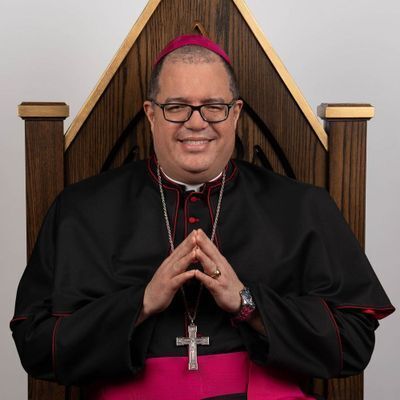
At the beginning of the school year, I feel compelled to bring to our attention the reality of bullying, a nightmare which affects all schools and programs involving groups of children and young people, including Catholic schools and parishes. As here in the Diocese of Palm Beach, we have made a strong commitment to ensure the safety of everyone in our community, especially the most vulnerable, the following thoughts are meant as a call to action to encourage parents, educators, administrators, family members and students themselves to remain vigilant about the threats and dangers of bullying in order to eradicate them completely from our midst.
The stories are heartbreaking, and they continue to happen. In 2022, 12-year-old Drayke Hardman died by suicide after reportedly enduring bullying at school. In May 2024, another tragedy captured national attention when 10-year-old Sammy Teusch of Indiana died by suicide. His family said Sammy had suffered repeated bullying at school and that they had repeatedly raised concerns about what was happening to their son.
More recently, in February 2026, 12-year-old Khimberly Zavaleta Chuquipa died after suffering a head injury during an alleged bullying incident at a Los Angeles school. According to authorities, she was struck with a metal water bottle. A juvenile was later arrested in connection with her death, while Khimberly’s family alleged that previous concerns about bullying had not been adequately addressed.
Different children, different circumstances, but one urgent reminder: bullying is not simply an unpleasant part of growing up. It can inflict profound physical and emotional wounds upon children and adolescents.
Bullying involves intimidation, humiliation, exclusion, threats, physical aggression or other abusive behavior, frequently involving an imbalance of power. It may include insults, ridicule, spreading rumors, deliberate exclusion, hitting, sexual harassment or destruction of property.
Technology has given this old problem a new and particularly dangerous dimension: cyberbullying. Through cellphones, social media and other digital platforms, humiliating material can reach hundreds or even thousands of people almost instantly. Cruel messages, rumors, photographs and videos can follow a young person home, turning what once might have ended at the school door into harassment that continues around the clock.
The consequences can be serious. Children who are bullied may experience fear, isolation, anxiety, declining academic performance, loss of self-confidence and depression. Research has also found an association between bullying and increased risk of suicidal behavior, although suicide is complex and should never be attributed to a single cause.
Children often do not tell their parents what is happening. Some are embarrassed. Others fear retaliation or believe reporting the problem will make matters worse. Parents and teachers should therefore recognize possible warning signs: reluctance to attend school, unexplained injuries, falling grades, withdrawal from family and friends, anxiety or significant changes in behavior.
When a child reports bullying, adults need to listen — and act.
Parents should reassure the child of their unconditional support, document what has happened and work with school authorities to establish an appropriate plan for the child’s safety. Professional counseling should be sought when necessary. Any indication of self-harm or suicidal thoughts requires immediate professional intervention. And when bullying involves physical assault, serious threats, sexual misconduct or other potentially criminal behavior, appropriate civil authorities should also be contacted.
Those who witness bullying have a responsibility as well. Young people should be taught never to encourage an aggressor, circulate humiliating images or remain indifferent to another person’s suffering. They should support the victim and seek the assistance of a responsible adult.
For us as Catholics, however, the fight against bullying goes even deeper.
Every child possesses an inviolable dignity because every human person is created in the image and likeness of God. Humiliating another person for entertainment, popularity or social acceptance is fundamentally incompatible with the Gospel.
Jesus identified Himself in a particular way with the vulnerable and rejected: “Whatever you did for one of these least brothers of mine, you did for me” (Mt 25:40).
Our Catholic schools, parishes and families must, therefore, be places where children know they are loved, protected and respected. We must teach our young people not only that bullying is wrong, but also that indifference to another person’s suffering is not a Christian response.
We cannot eliminate every act of cruelty from the lives of our children. But we can refuse to normalize cruelty. We can listen. We can intervene. We can educate. We can protect.
Above all, we can teach our children, by word and example, that another person’s dignity is never something to ridicule, exploit or destroy.
Every child deserves to know that his or her life has immeasurable value. And every child who suffers should know: you are not alone.
I encourage everyone to report any situation involving bullying to the school’s principal and/or president, as well as to the related pastor or program director. Moreover, our victim assistance coordinator, Ms. Anthuanette Hidalgo, is available for further support at 561-775-9558 / email: vac@diocesepb.org
Bishop Manuel de Jesús Rodríguez, JCD
