

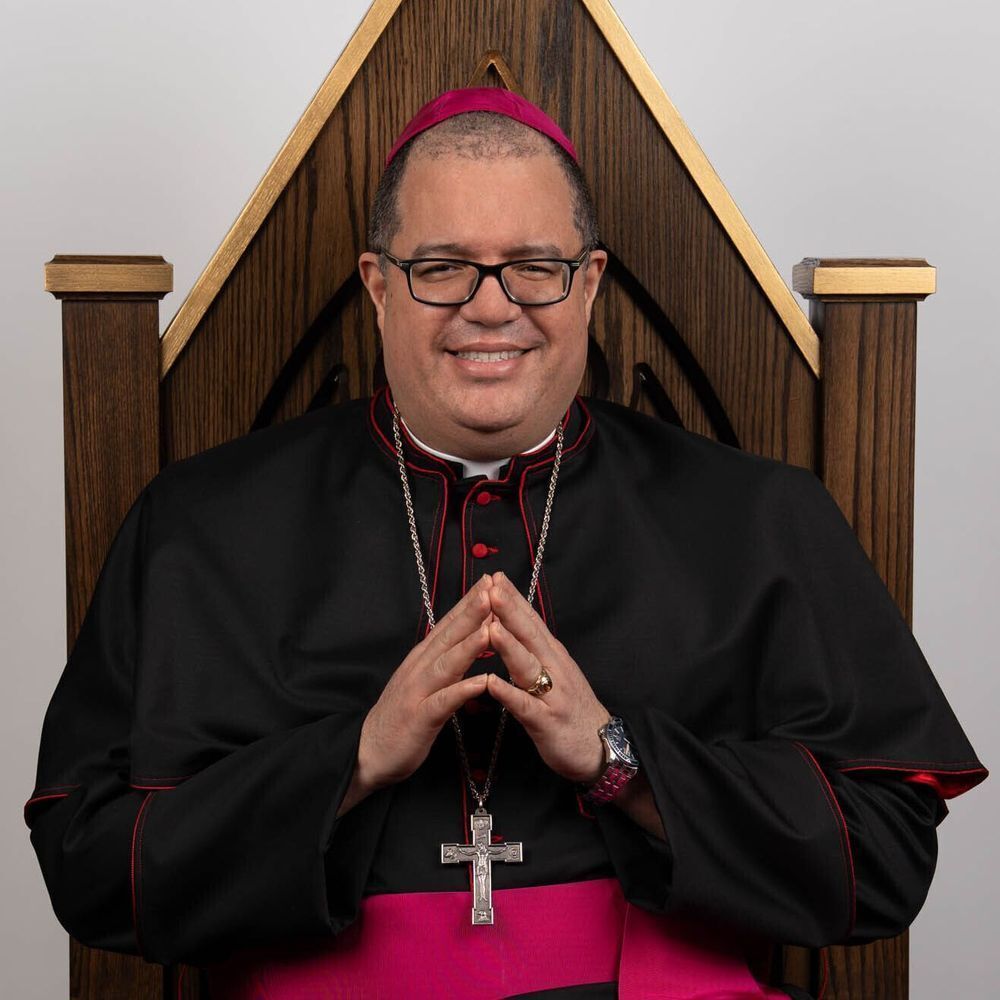
Few responsibilities entrusted to the Church are more important than safeguarding the dignity, health and well-being of those entrusted to our pastoral care. This responsibility is especially profound when it concerns children, families and the educational communities that serve them.
Recently, I appointed a commission composed of clergy, educational leaders and medical professionals to undertake a careful review of the Diocese of Palm Beach’s vaccination policy for our Catholic schools. Their mandate was not merely to examine medical considerations, but also to reflect upon the theological, pastoral, educational and moral dimensions of the question. Their discussion was thoughtful, respectful and balanced.
The commission recognized an important truth: faithful Catholics may, after sincere prayer and reflection, arrive at different prudential conclusions regarding vaccination. The Catholic Church does not teach that receiving vaccines currently in use is morally obligatory in every circumstance. At the same time, the Church has consistently taught that these vaccines are morally permissible, even where some have remote historical connections to fetal cell lines. Consequently, the question before our Diocese is not fundamentally one of religious liberty, but rather one concerning the exercise and formation of conscience.
The Church has always defended the dignity of conscience. Yet, she has also consistently taught that conscience is not simply a matter of personal preference or sincerely held opinion. Conscience must be properly formed through prayer, sound moral reasoning, the teachings of the Church and reliable factual information. Respect for conscience and the formation of conscience are inseparable responsibilities within the Christian life.
After carefully weighing the arguments presented, the commission concluded that maintaining the Diocese’s current vaccination policy best serves the common good of our Catholic school communities. I concur with that judgment.
Our schools are communities, not merely collections of individuals. More than 7,000 students and their families have freely chosen a Catholic education with the understanding that they would comply with the policies governing our schools. Among those students are children who are medically vulnerable or immune-compromised and whose well-being depends, in part, upon the health protections maintained by the community around them. The Diocese has a moral responsibility to safeguard those children as well.
Some have asked why the Diocese does not simply provide exemptions based upon individual claims of conscientious objection. This is an understandable question. However, every institution has both the right and the responsibility to establish reasonable conditions for participation in its own apostolic mission. Families freely choose whether to enroll their children in our Catholic schools, and in doing so they freely accept the policies established for the benefit of the entire school community. Maintaining those expectations provides consistency, fairness and stability for every family entrusted to our care.
This policy should never be interpreted as a lack of pastoral concern for families who experience genuine difficulties of conscience. On the contrary, the commission strongly encouraged the Diocese to continue accompanying such families with compassion and respect. It also suggested that alternative educational models, including homeschooling partnerships, hybrid programs or virtual learning opportunities, might be explored for those whose consciences prevent compliance with the current policy. Such pastoral accompaniment deserves careful consideration. As bishop, I remain deeply committed both to protecting the dignity of conscience and to promoting the common good of every child entrusted to our Catholic schools. These responsibilities are not opposed to one another. Rather, they call us to exercise prudence, charity and sound judgment in the service of the Gospel.
For these reasons, after careful consultation and prayerful reflection, I have determined that the Diocese of Palm Beach will maintain its current vaccination policy. At the same time, we remain committed to accompanying every family with respect, listening to their concerns, assisting them in the proper formation of conscience, and seeking pastoral solutions that reflect both the truth and the charity of Christ. We also firmly affirm our constitutional right, as protected by the First Amendment to the Constitution of the United States, to govern our Catholic schools in accordance with our religious mission. Accordingly, we will continue to uphold policies that safeguard the health, well-being and common good of our school communities.
Our Catholic schools exist to form young people not only in academic excellence, but also in faith, virtue and love of neighbor. Every policy we adopt must ultimately serve that sacred mission.
Bishop Manuel welcomes comments and reflections from readers: bishopofpalmbeach@diocesepb.org
