

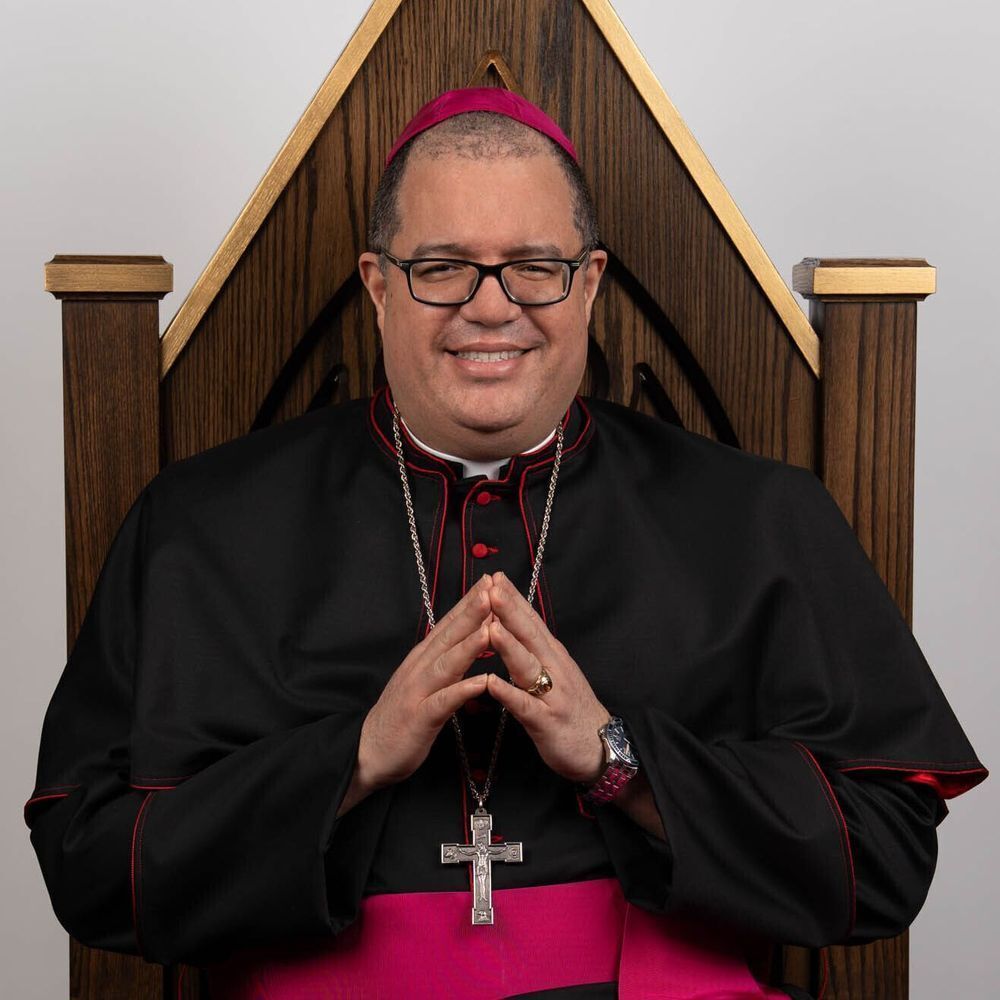
I recently appointed a diocesan exorcist and an associate diocesan exorcist for the Diocese of Palm Beach. Both are outstanding priests of our diocese, already active in parish and school ministry, who have now been entrusted with this specialized responsibility in service to God’s people.
For the time being, I have decided to keep their identities reserved. The ministry of exorcism should never become a source of curiosity, publicity or sensationalism. Those who genuinely believe that they or someone they love may need this particular form of spiritual assistance are invited to contact our Chancellor’s Office, where they will be received discreetly and offered appropriate pastoral care.
Alongside these priests, we are establishing a Diocesan Exorcism Ministry Team to assist in the careful discernment of cases and, whenever truly necessary, in the celebration of solemn exorcisms within our diocese.
Why are we doing all this? The simplest answer is perhaps the one our culture finds most uncomfortable: because the devil exists. And we should not take him lightly.
Belief in Satan and the fallen angels is not a medieval invention. It belongs to sacred Scripture and to the constant faith of the Church. Jesus Himself confronts Satan, resists his temptations and casts out demons. He tells His disciples: “I have observed Satan fall like lightning from the sky” (Lk 10:18).
Scripture also presents St. Michael the Archangel as the great defender of God’s people. The Book of Daniel calls him “the great prince, guardian of your people” (Dan 12:1). The Letter of Jude depicts Michael confronting the devil and invoking God’s own authority: “May the Lord rebuke you!” (Jude 9). And Revelation gives us the striking image of a cosmic battle: “Michael and his angels battled against the dragon” (Rev 12:7) — identified explicitly as “the ancient serpent, who is called the Devil and Satan” (Rev 12:9).
But Scripture immediately tells us where the real victory comes from: “They conquered him by the blood of the Lamb” (Rev 12:11). St. Michael fights, but Christ conquers.
Few modern popes spoke about this reality more forcefully than St. Paul VI. In his well-known general audience of Nov. 15, 1972, he taught that defense against the evil we call the devil is “one of the greatest needs” of the Church. He described Satan as “the enemy number one” and “the tempter par excellence.”
Paul VI nevertheless warned against attributing every evil, sin or human difficulty directly to demonic activity. The Church believes in the devil, but she does not obsess over him. Discernment and prudence are essential.
Pope Francis returned to this subject often. His teachings were later gathered by the U.S. Conference of Catholic Bishops in the volume Rebuking the Devil. Francis warned us plainly that the devil is real even in our own century, and that Christians cannot afford to be naïve about it.
Yet, Francis’s message is not one of fear. Satan’s ordinary work is usually far less dramatic than popular culture suggests. He deceives, divides, discourages and tempts. He makes compromises with evil look reasonable and sin look harmless. Above all, he seeks to separate us from God.
That is why Rebuking the Devil ultimately points our attention not toward Satan but toward Jesus Christ. Pope Francis consistently directs Christians to the spiritual weapons God has already given us: the Word of God, the sacraments, Eucharistic adoration, prayer, fasting and the intercession of the Blessed Virgin Mary.
We should also confidently invoke St. Michael the Archangel, whom Scripture presents as the defender of God’s people. Yet, Michael’s own words in the Letter of Jude remain essential: “May the Lord rebuke you!” Our confidence is never in our own spiritual power. It is always in God.
This is also why the Church exercises great caution regarding exorcism. Serious psychological, emotional or behavioral difficulties should never be automatically interpreted as evidence of demonic possession. Medical, psychological, psychiatric and spiritual factors must all be carefully weighed — which is one reason we are establishing a team to accompany our exorcists in this work.
Solemn exorcism is reserved for exceptional circumstances and may be performed only by a priest specifically authorized under the norms of the Church. Most people experiencing spiritual struggles will never need one.
What they need is Christ.
They need confession and the Eucharist. They need prayer and sacred Scripture. They need the communion of the Church and a life of grace. When appropriate, they may also need competent medical or mental health care.
St. Paul VI summarized our greatest protection against evil in a single phrase: “Grace is the decisive defense.”
That is the Catholic approach in a sentence. Our greatest defense against the devil is not fascination with demons but a life united to Jesus Christ. Stay close to the Eucharist. Go regularly to confession. Pray. Read Scripture. Pray the rosary. Invoke the Blessed Virgin Mary and St. Michael. Reject hatred and sin. Practice charity. Remain in God’s grace.
And do not be afraid.
Our new Diocesan Exorcism Ministry is not being established to proclaim the power of Satan. It is being established to proclaim the power of Jesus Christ over Satan.
It must never become a ministry of fear. It is a ministry of hope and liberation, serving those who suffer while proceeding quietly, prudently and prayerfully.
Yes, the devil exists. St. Paul VI warned us not to dismiss that reality. Pope Francis reminds us not to be naïve about it. And sacred Scripture shows St. Michael standing against the dragon.
But Scripture also tells us how the battle ends:
“They conquered him by the blood of the Lamb” (Rev 12:11).
Satan exists, but Jesus Christ is Lord. The final word belongs neither to Satan nor to darkness. It belongs to the crucified and risen Christ.
I, therefore, invite all members of the people of God in our diocese to promote awareness about this new ministry and to take advantage of it whenever needed. Together, trusting in the power of the blood of Christ and counting on St. Michael the Archangel, who defends us in battle, we can overcome every evil and all the snares of the evil one. God bless.
Bishop Manuel de Jesús Rodríguez, JCD
