

On Tuesday, Nov. 3, 2026, millions of Americans will take part in our nation’s mid-term elections, exercising one of the most precious rights and responsibilities of citizenship. I extend a heartfelt invitation to all the Catholic faithful of the Diocese of Palm Beach: if you are legally eligible to vote, please exercise that right with a well-formed conscience, a profound love for the United States of America and a sincere commitment to the Gospel of Jesus Christ.
This election comes in the year our nation celebrates the 250th anniversary of its independence, a fitting moment to renew our gratitude for the blessings of freedom and to reaffirm our responsibility for the common good and the dignity of every human person.
The Church has consistently taught that responsible citizenship is both a virtue and a moral obligation. The Catechism of the Catholic Church reminds us of our duty to participate in public life (cf. CCC 1913-1915) and teaches that our shared responsibility for the common good makes voting a moral obligation (cf. CCC 2240). The Second Vatican Council, in Gaudium et Spes, calls citizens to a generous devotion to their country while keeping in view the welfare of the entire human family (cf. No. 75). As Jesus taught, we give to Caesar what belongs to Caesar, and to God what belongs to God (cf. Mt 22:21).
To vote our conscience, we must first form our conscience. A Christian conscience is not merely a collection of personal opinions, political preferences or emotional reactions. It is enlightened by reason, divine revelation and the moral teaching of the Church, and nourished by prayer and honest self-examination. The U.S. bishops, in Forming Consciences for Faithful Citizenship, remind us that our political participation must be guided by moral conviction rather than blind allegiance to any party, personality or ideology.
No political party holds a monopoly on the Gospel. No candidate embodies the fullness of Catholic teaching. Our first allegiance belongs to Jesus Christ. For this reason, the Church does not endorse candidates or parties; her mission transcends partisan politics. Yet, political neutrality is not moral indifference. The Church has both the right and the duty to proclaim the moral principles that must guide our life in society.
Catholic social teaching, from Pope Leo XIII’s Rerum Novarum to Pope Francis’s Fratelli Tutti, calls us to defend human life from conception to natural death; to protect marriage, the family and religious liberty; to promote justice and peace; to care for the poor and vulnerable; to uphold the dignity of workers; to respect migrants and refugees; and to care for God’s creation. Not every moral issue carries the same weight, but none of these concerns may be set aside for political convenience.
Our Holy Father, Pope Leo XIV, has reaffirmed these principles in his first apostolic exhortation, Dilexi Te (2025), reminding us that love for the poor lies at the very heart of the Gospel, for in
them we encounter Christ himself. Christian charity must shape not only our personal relationships but also our choices as citizens.
As Nov. 3 approaches, let us ask ourselves: Have I prayerfully examined the issues and the candidates? Does my decision reflect respect for human dignity and the teaching of the Church? Am I guided by truth and conscience, or by partisan loyalty, fear or prejudice? Here in Florida, our ballot also includes proposed amendments to the state constitution. Please read them carefully before Election Day, not for the first time in the voting booth.
Our nation also needs a renewed spirit of civility. Political disagreement must never become an excuse for hatred or contempt. We can hold firmly to our convictions while honoring the dignity of those with whom we disagree, in our homes, our parishes and on social media.
To those in our communities who are not legally eligible to vote: your dignity and your contributions to this country are no less valuable. Through your work, your families, your service and your prayers, you too help build a more just society.
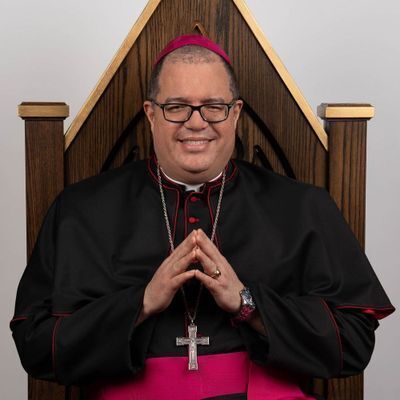
As bishop of Palm Beach, I neither endorse nor oppose any candidate or party. Do not vote merely out of party affiliation, popularity or promises. Vote as a responsible citizen, a person of conscience and a disciple of Jesus Christ. Do not be afraid to vote for whomever you sincerely believe should be elected, but do so in good faith, after calling upon the Holy Spirit to guide your discernment.
Let us entrust our beloved nation to the Blessed Virgin Mary, the Immaculate Conception, patroness of the United States. May God guide our leaders, protect our democratic institutions and make each of us an instrument of justice, reconciliation and peace.
Vote your conscience. Vote your Gospel. Vote with love for the United States of America and with unwavering fidelity to Jesus Christ.
Bishop Manuel de Jesús Rodríguez, JCD
